Adventures in the Cloud Forest

Bromeliad in the mist.
Let me start this post by saying that I adore the cloud forest. In my opinion, there are few places in the world that rival the cloud forest in beauty and tranquility. For the last three weeks I have been staying at Wayqecha Biological Reserve at a research station run by the Amazon Conservation Association. The station is located at 2,950 meters elevation and to get to the station, you can either take a bus for around $3.00 or hire a private truck for around $130.00 from Cusco. Despite my typical frugality, I opted for the latter because I have never been on such a scary road. In the olden days (a few years ago), the road was one-way on alternating days (you could venture to Cusco Monday, Wednesday, Friday, etc.). Now, the road is a two-way free-for-all and is reminiscent of the Blue Ridge Parkway in terms of its curves and cliffs. So, at inopportune moments, you meet a large truck flying around a curve and hope that your driver has his wits about him.
I arrived safely a few weeks ago and quickly realized that being in shape in North Carolina is very different from being in shape at altitude. All of the trails either go up or down and some drop over 1200 feet (400 meters) in less than half a mile. For the first three days, I was challenged by the staircase that leads down to the ‘comedor’ or dining hall, but I quickly adjusted to the altitude and only appeared to be having a mild asthma attack after a few switchbacks on the trail. My days were dictated by the weather. Some mornings brought clear skies and others were foggy beyond belief. On the cloudier days, I worked close to the cabin, ready to dash back with my equipment in the event of a thunderstorm or rainstorm. You are much closer to lightening at 2,950 meters. Each day brought new species of birds, insects, and orchids. The landscape was constantly surprising and I hope I captured some of that wonder in my images. Despite the harrowing road to get there, I would recommend Wayqecha to any outdoor enthusiast.
I am now snug in a hotel in Cuzco sipping coca leaf tea and eating my second piece of chocolate cake. I will post more images tomorrow, along with a few videos and excerpts from my journal.
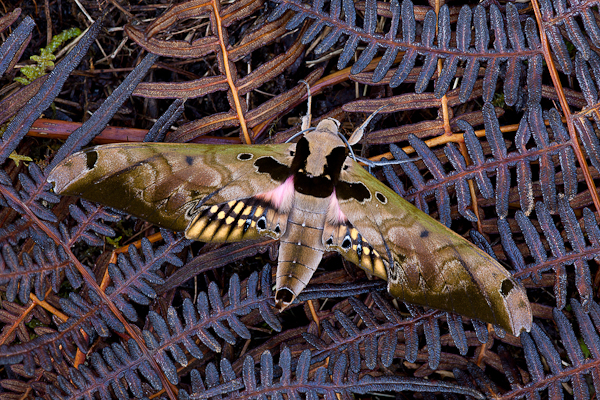
Moth.

Bromeliad.
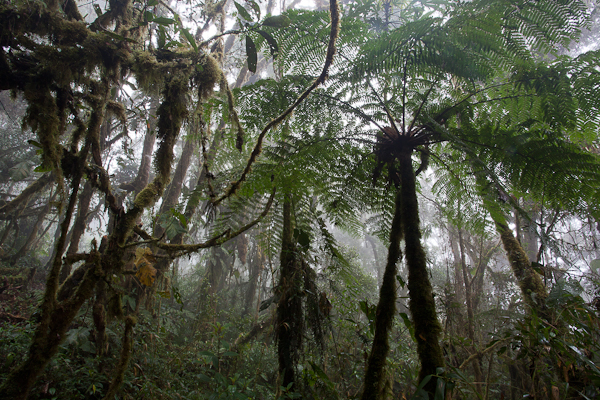
Tree Palm in Mist.
Back in Internet
The evening of my last post we had a thunderstorm of epic proportions. While stunning to behold and to photograph, it also knocked out the satellite and our Internet access for the past two weeks. So I have been running up and down mountains for the last two weeks, taking thousands of images, and have had no way to share them with you. I return to Cusco tomorrow morning with a much greater knowledge of the cloud forest and a lot of beautiful images. I’ll be sharing these over the next week through the blog. For now, see below for a snapshot of the past few weeks here at Wayqecha.
Gabby
A Night in Pilco Grande
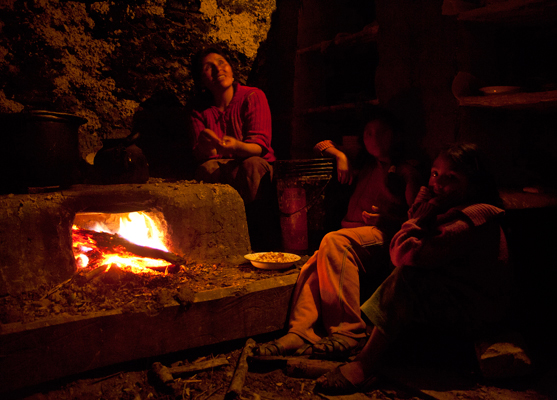
A night by the fire in Pilco Grande.
This morning, my guide Panchito and I began our journey to the villages of Pilco Grande, Jajahuana, and Sunchubamba. The Asociación para la Conservación de la Cuenca Amazónica (ACCA) works with these communities on reforestation projects. Each community has also set aside a chunk of forest as a communal reserve. My job is to photograph the people in each community and the plants and animals in their forest with the ultimate goal of creating a photo/video presentation to give to the communities.
We were able to hitch a ride to Pilco Grande with Dr. Imma Oliveras, a research associate from the University of Oxford, and one of her graduate students. She had hired a car for the day and they were going in the general direction of Pilco Grande. We spent the morning stopping at research sites in Manu National Park for her project on fire dynamics in the Andes. Essentially, all the mountains around here used to be covered with cloud forest. In the present, most are bare and dry. The local people have cleared the land over time to create room for agriculture and grazing. It is a difficult place to remove trees, so they often use fire. The removal of the cloud forest through fire permanently alters the water cycle on these mountains, leaving a dry, barren landscape in what was once a rich, moist ecosystem.
We visited two sites in Manu National Park and then proceeded to hike down and around a mountain through the puna (a high elevation ecosystem with low shrubs). It was only my second hike at elevation and I felt it. I was sweating and huffing and puffing the entire time. The trails were barely visible and were not even real trails, but imprints left by cows skirting the mountainsides. Despite the difficulty of the hike, I had a fantastic time. Imma was incredibly interesting and very spunky. We hiked for over 5 hours, stopping at study sites along the way. Some of the sites were all but inaccessible and yet there are researchers braving the heights to sample them for tree density and soil properties. From the ridges, we were able to see two fires on opposite slopes.
After the hike, we met the driver and took the car down to Pilco Grande – our ultimate destination. They dropped us off in front of the house owned by the President of the community. He was away, but his children said we could pitch our tent behind their house. They watched us assemble our camp through cracks in the wall of their house. Just a few minutes later, the President and his wife pulled up on a motorcycle. We introduced our project and ourselves and received an incredibly warm welcome. After the formalities, I went to rest in the tent, while Panchito went searching for birds. A few hours later, Panchito returned to me to ask for medicine. The President’s wife was very sick. With my limited knowledge, I gave instructions for her to rest and drink water and provided some Tylenol for the fever. I ventured into the house a little later to find everyone gathered around a fire. They offered me hot water with sugar and a bowl of boiled corn kernels. Guinea pigs, a common food staple, scampered around my feet on the floor of the house. As we sat in the glow of the fire, the President informed me that I was the first extranjera (foreigner) ever to visit Pilco Grande. They had seen tourists pass in cars, but no one had ever bothered to stop. The community itself is made up of 27 families and they are spread out in the mountains. There is a school and only three buildings have electricity. The rest of the houses, like the one I was staying in, lack electricity and running water. There is a river right beside the town, so there is no need for showers or sinks.
The lack of running water was not an issue until I ventured to use the restroom. I have experienced some interesting bathrooms in my day –lalas at Girl Scout Camp, gold-rimmed holes in Moscow, and pits in Africa. I just wasn’t prepared for this. It was a concrete pit with a pipe leading into the ground and I could not figure out how to flush it. I stayed in the bathroom for far too long and finally emerged to motion Panchito over to the shed. The solution, of course, was to walk across the yard and bring the garden hose into the shed to flush everything into the pipe. It was a funny, if slightly embarrassing, learning experience.
Plumbing challenges aside – I sat around the fire for a couple of hours that night listening to the President speak about his vision for the community. They are using part of their land for agriculture, but the President is intent on keeping a large chunk of primary forest as the communal reserve and on reforesting much of the other land with native trees. As he spoke, I was impressed with his understanding of the importance of conservation. He spoke to me of his hope that by preserving the land, the community will be a rich place for future generations, and of wish that his children will want to bring their families back to live there. Out in the middle of nowhere, in a place where people struggle to farm potatoes on mountainsides in inhospitable climates, I found an amazing ray of hope for the future.
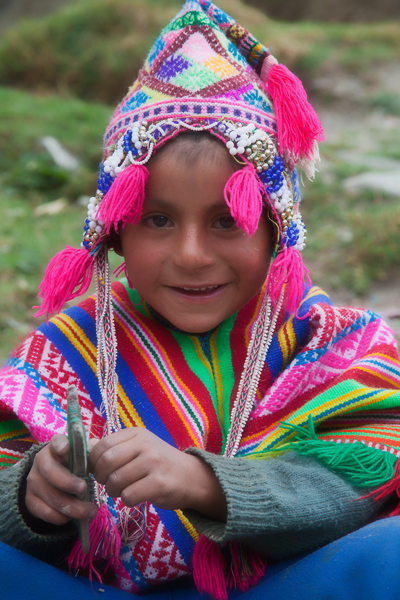
The President's Son
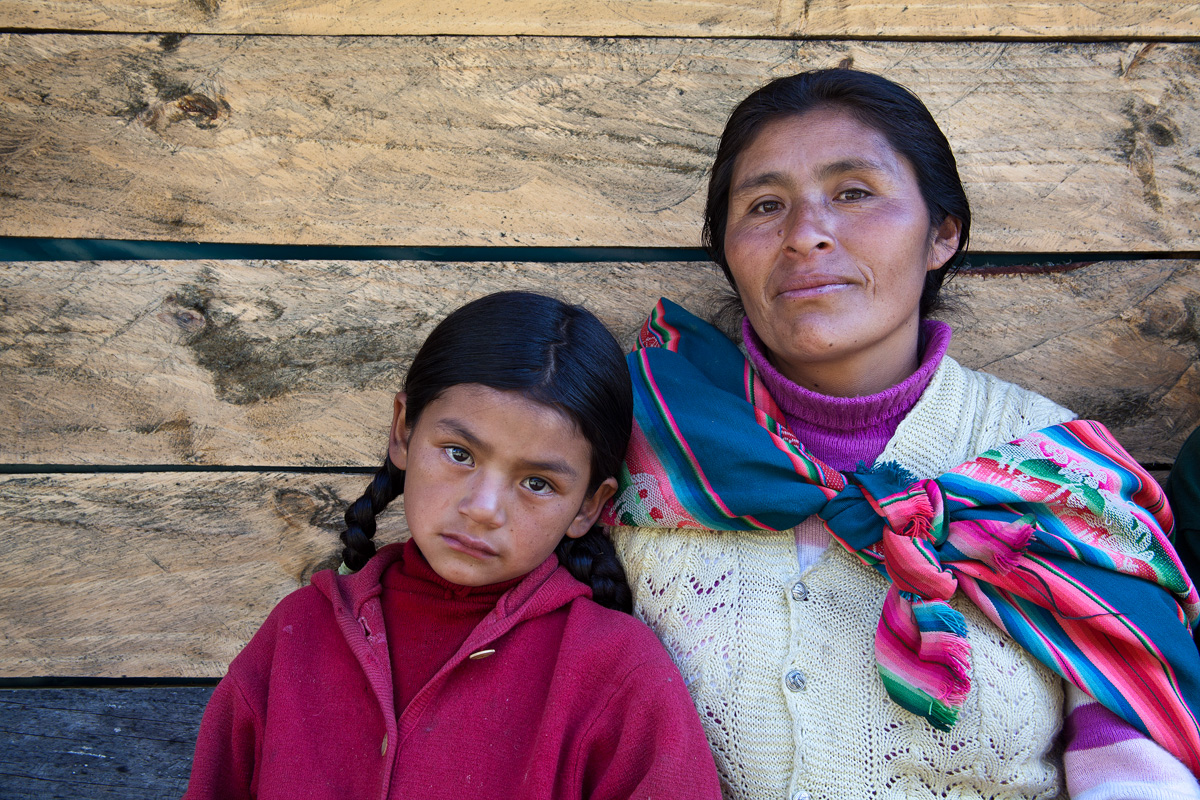
The Wife and Daughter of the President of the Community of Pilco Grande
Orchids

Orchid (Telipogon sp.)

Orchid

One of 230 orchid species found in Wayqecha Reserve.

Orchid species
Andean Villages
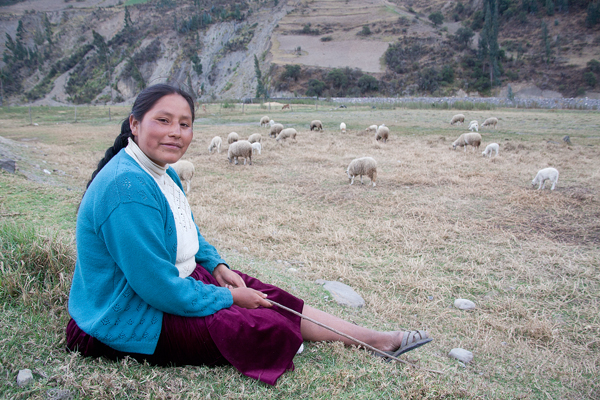
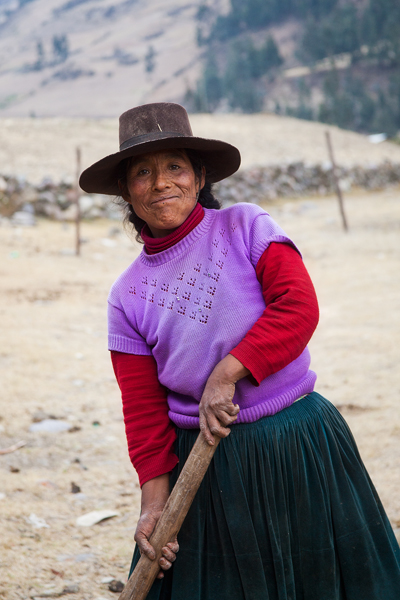
Woman chopping wood in Suchubamba.
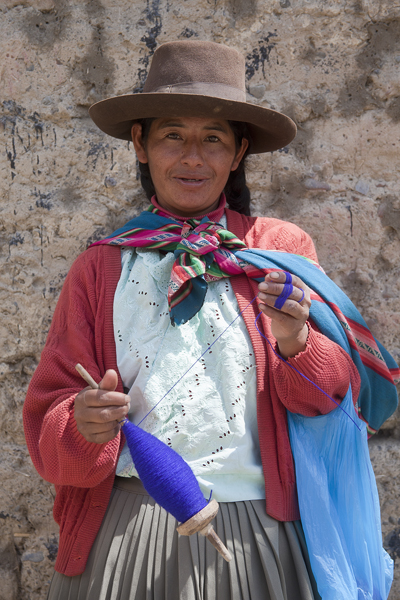
Woman spinning yarn.
Strikes

Alpaca parked on side of road in Cuzco, Peru.

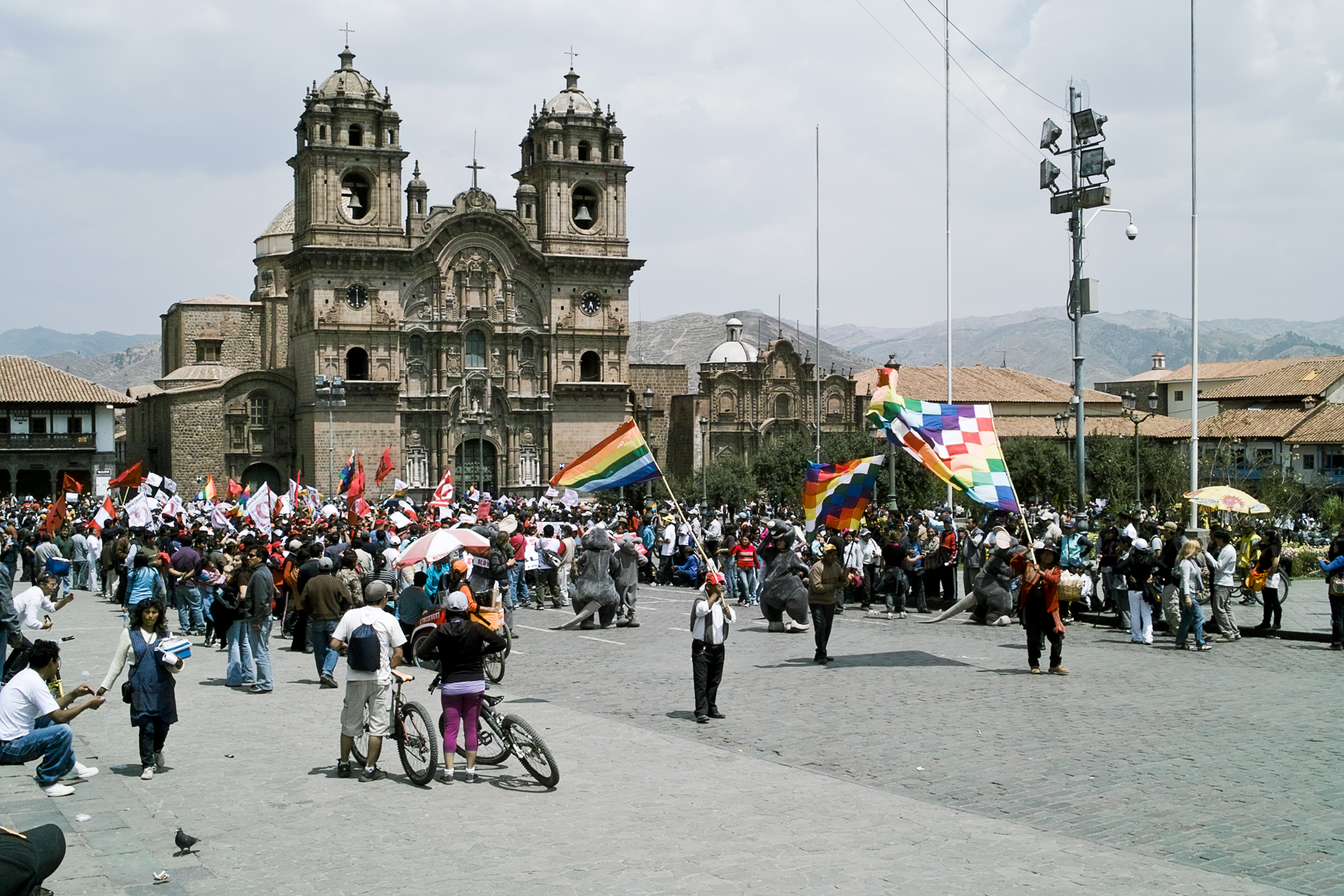

Man on the streets of Cuzco.
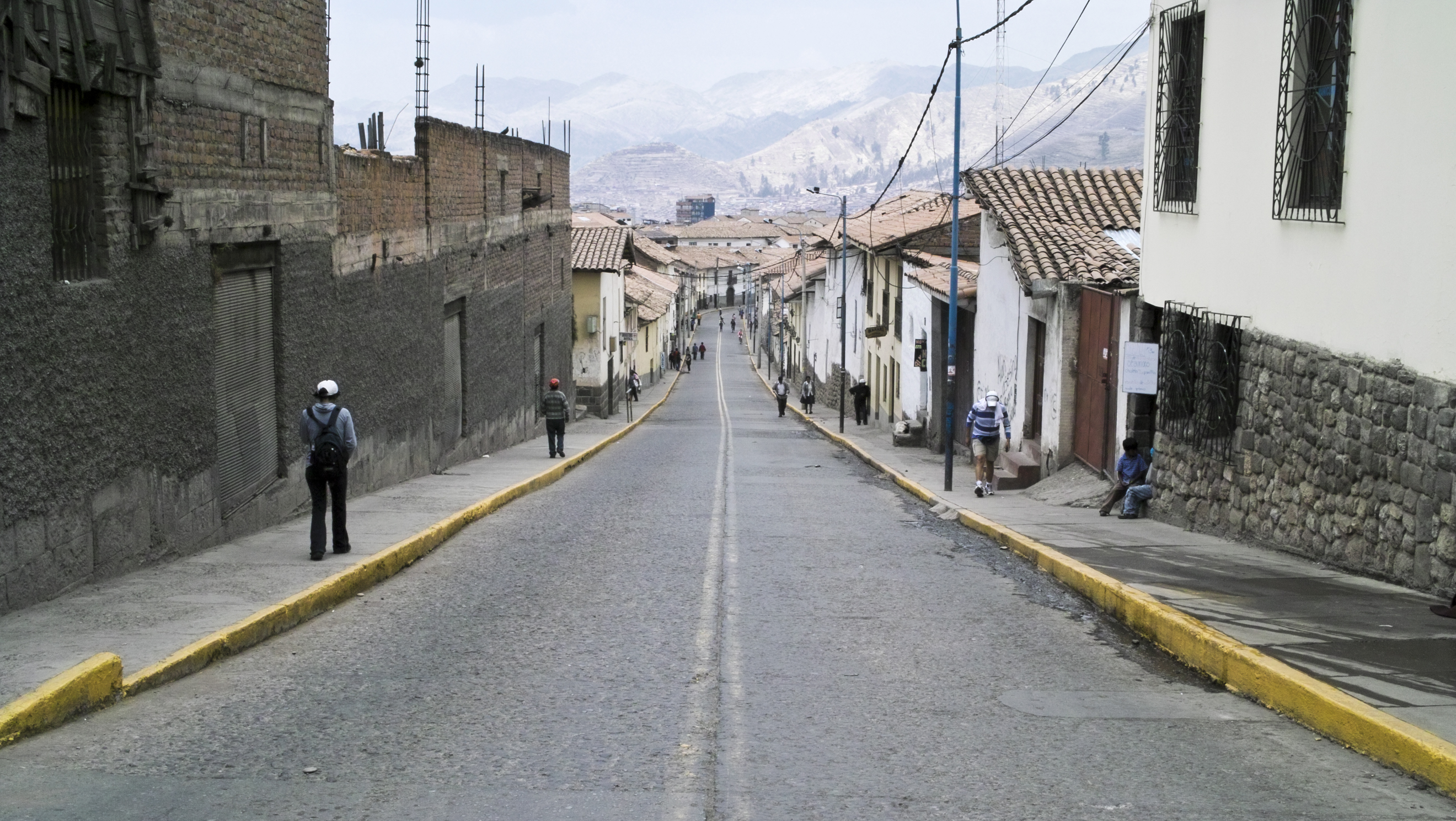
Empty streets during a 2-day strike in Cuzco, Peru.
Charged by Alpacas
I’ve been in Cuzco for a full day. My plane was delayed and I arrived at at my hotel dizzy and breathless because of the altitude shift. I spent the evening sipping coca leaf tea by a crackling fire in the hotel and reading.
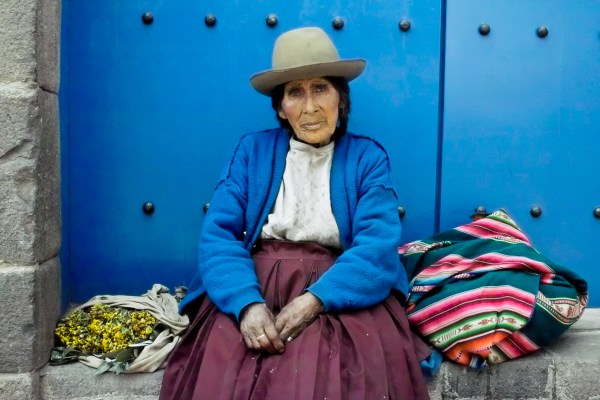
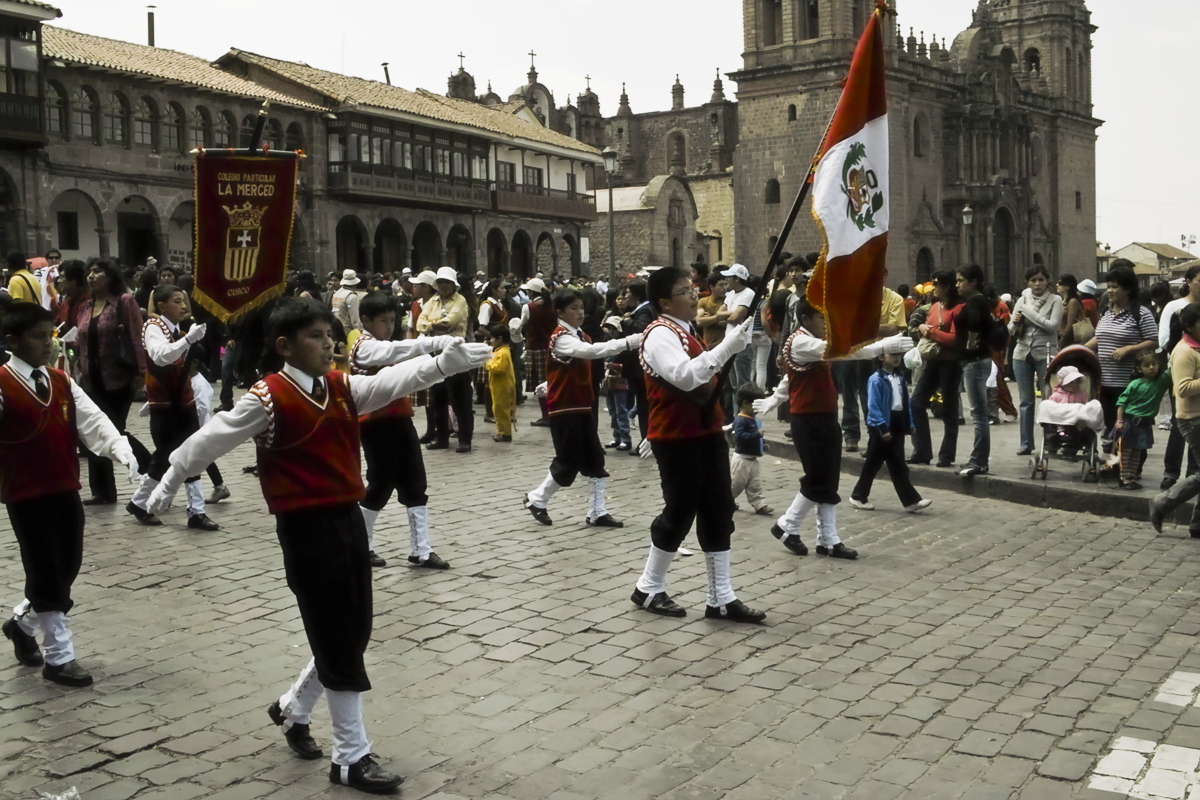
This morning I woke up refreshed and ventured out to the Plaza de Armas in Cuzco. There I found an incredible parade featuring little girls dressed as fairies, men in suits, and far too much gunfire for my comfort. I took a few pictures of the hustle and bustle and made my way over to the museum sector. I came across this Andean woman in traditional dress along the way and asked to take her picture. Of course, it was for a price, but I gladly paid the 4 soles ($1.50) for a few snapshots.
After leaving the woman I climbed the stars to San Blas, a district of Cuzco and a place where tourists can find good, cheap food that is safe for our stomachs. As I was walking down the street and about to turn a corner, a small boy came rushing at me with two alpacas. While I’ve come to expect many surprises in the streets of South America, I have never been charged by alpacas.
The Departure
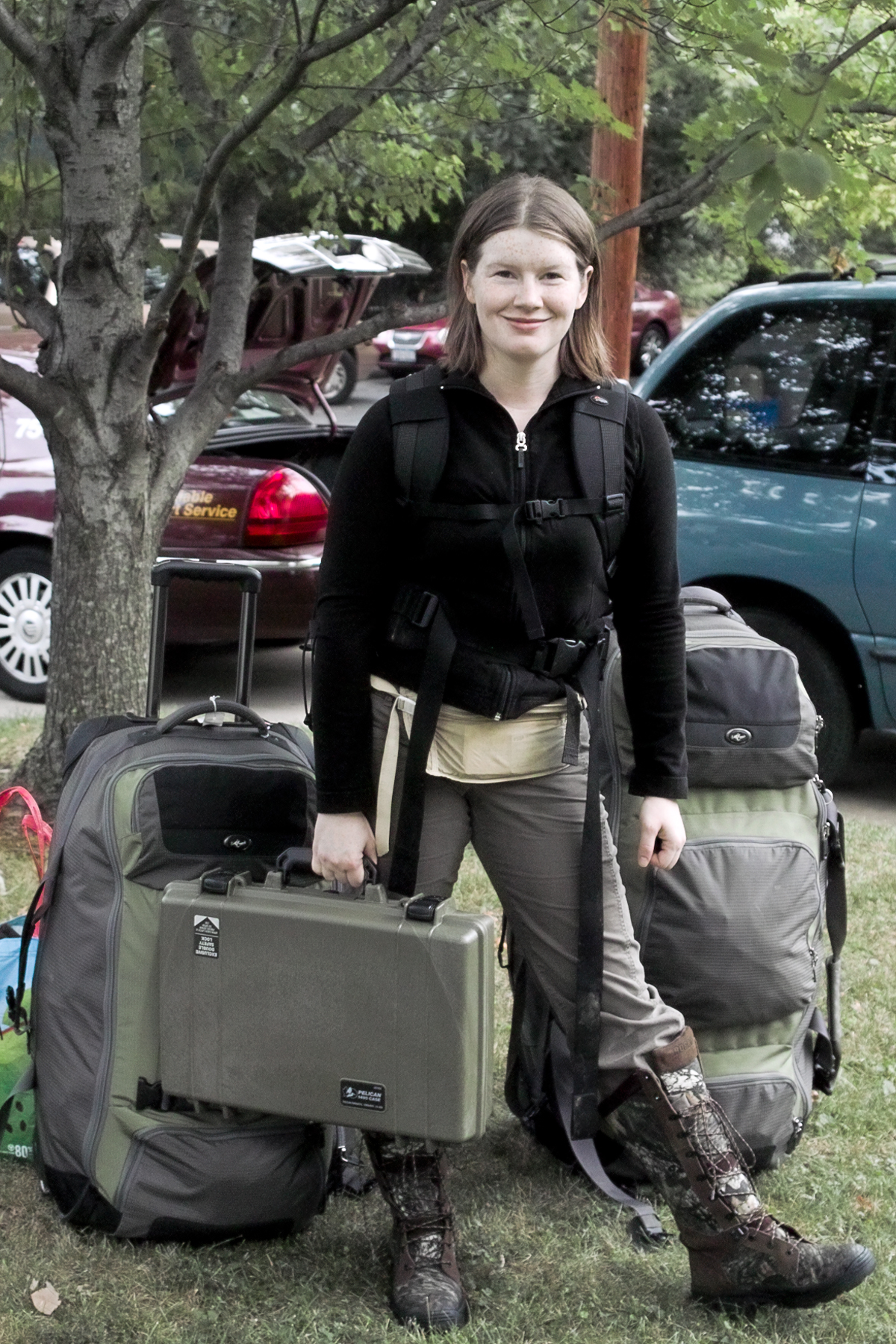
Before the flight - snake boots and all.
I spent a restless final night in the United States wrought with dreams in which my carry-on pieces were too big and my cameras were confiscated by Peruvian customs. Mike the taxi driver arrived right on time and I asked him to take a few photos of me with my overweight baggage (see above). Due to a recent overweight luggage embargo in the city of Lima, I had to wear my knee-high snake boots on the plane. If you ever want to turn heads in Houston, Texas – wear snake boots. They are like lingerie for hunters. Some of my favorite comments from airport and TSA officials were “Those would go great with a mini-skirt.” and “I love a woman who is prepared for duck hunting season.” When asked by a flight attendant about the snake boots, I assumed a straight face and replied, “That movie Snakes on a Plane really freaked me out.” The joke was wasted on her, but the people behind me giggled.
I arrived in Lima on time and made it through customs without a hassle. Since that time I have been taking care of business in Lima and talking about the economy, baseball, and Michael Jackson with various taxi drivers in Spanish. These topics seem to be universally associated with the United States. I’ve found everyone to be incredibly kind and helpful and am excited to travel to Cusco in the morning to start the first leg of my journey.
Below are a few pictures from my tour of Huaca Pucllana, ruins of the Lima culture that reigned in Cusco between 200 and 700 A. D. The ruins were fascinating – they were built in a “bookshelf” style to withstand earthquakes. In the photos, I tried to capture the juxtaposition of these ancient ruins in the middle of the bustling city.
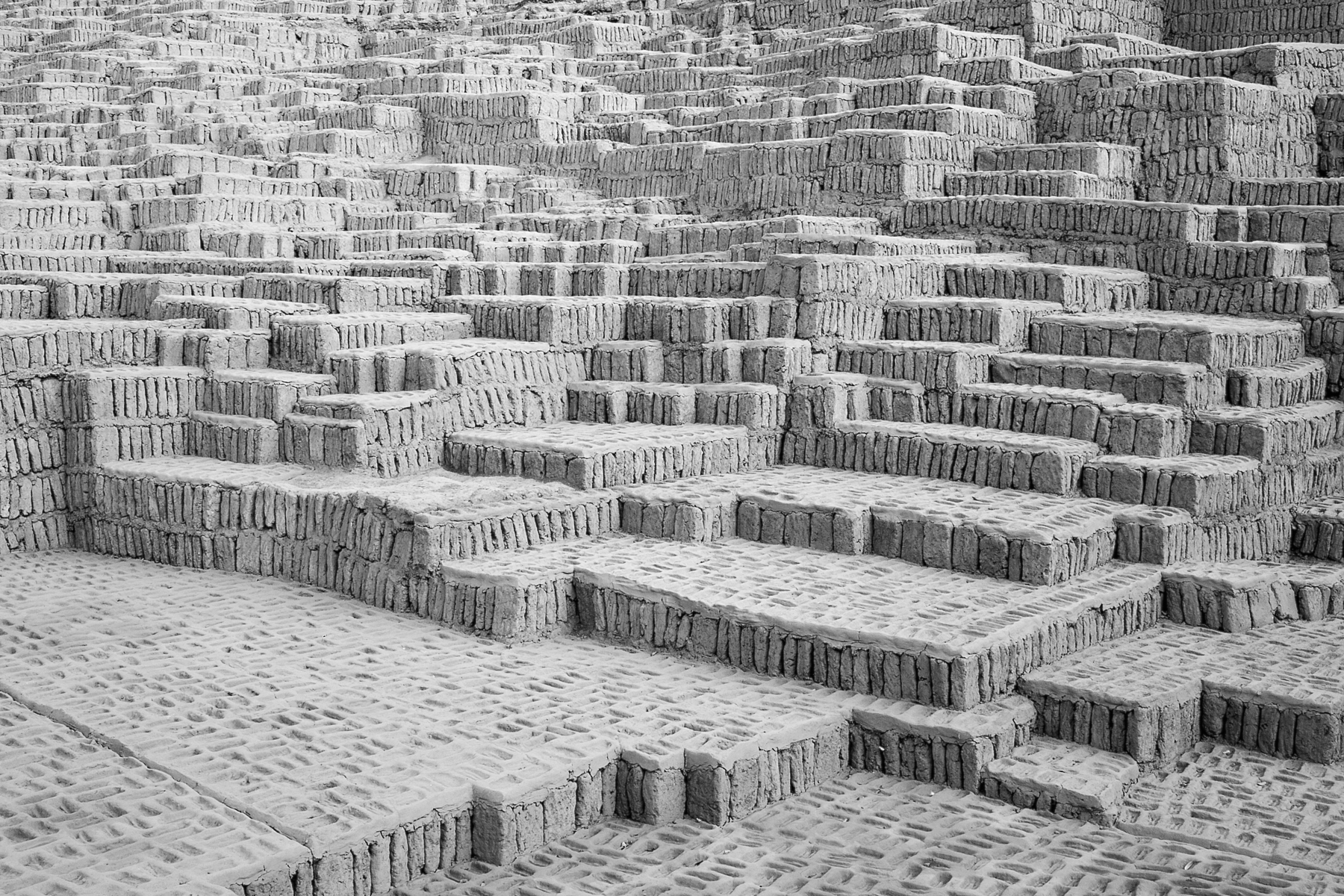
Huaca Pucllana Ruins
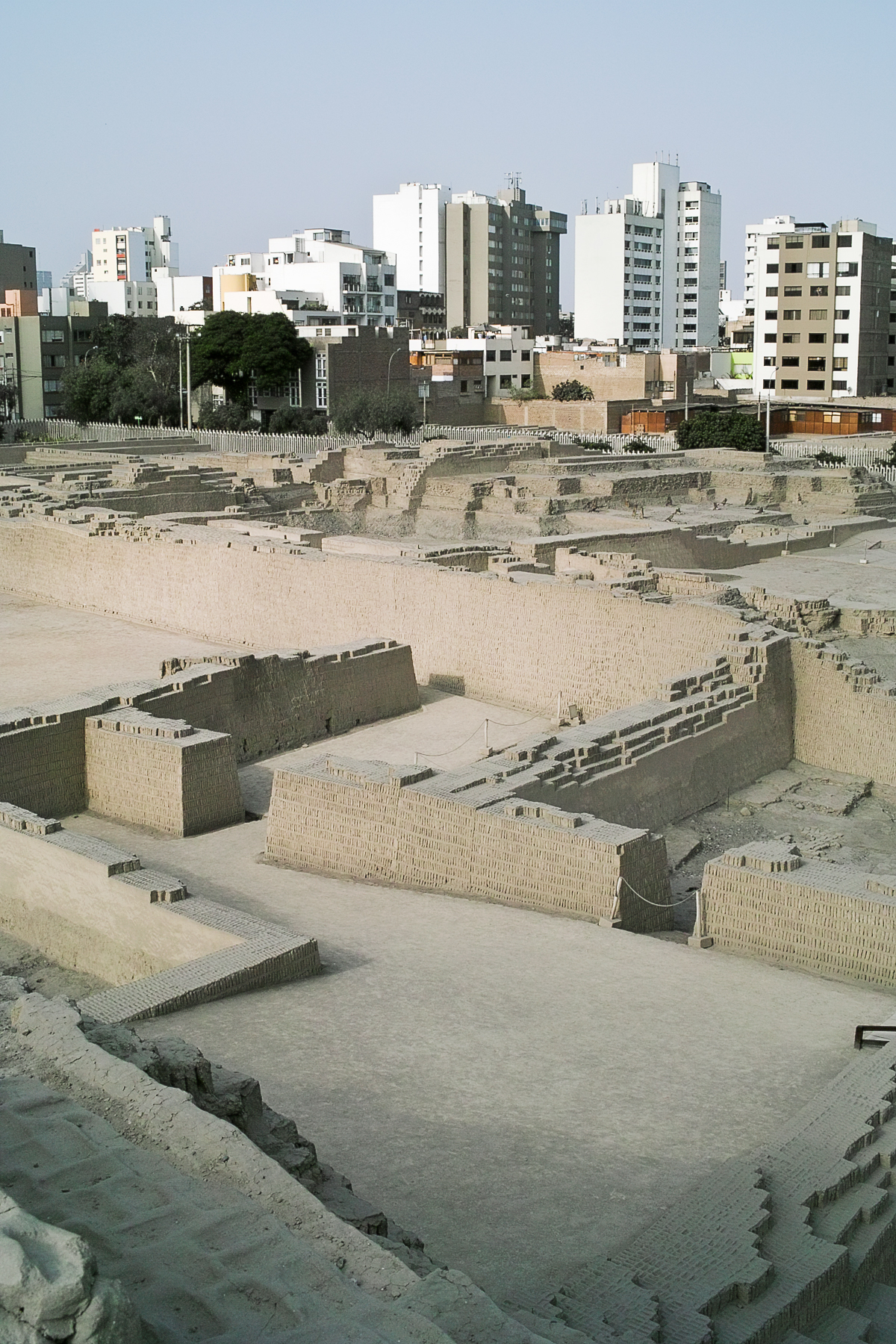
The ruins of Huaca Pucllana with Lima, Peru in the background.

Tourists at Huaca Pucllana
Leaving for Peru

Dear Friends!
I leave for Peru on September 16th for 10 months on a U.S. Fulbright. I will be working with the Asociación para la Conservación de la Cuenca Amazónica on a conservation photography project centered around the Inter-oceanic highway that is being constructed across Peru and Brazil to connect the Pacific to the Atlantic (there is a great NPR story here if you are interested: http://www.npr.org/templates/story/story.php?storyId=112535943). The highway is cutting directly through the Andes and the Amazon basin. I’ll be photographing the creation of a mega-corridor connecting protected areas along the highway, including community-based projects that pursue sustainable extraction of forest products.
I will be camping, hiking, and canoeing as I make my way from the slopes of the Andes to the lowland Amazon basin. My accommodations will range from tents, to the floors of village huts, to bunks in remote research stations. Rick Stanley, my partner and another young photographer, will be joining me in January to work on the project.
If you would like to follow me on this journey, please subscribe to the blog using the RSS feed on the right.
Best,
Gabby
 Road to Amazonia